


Commercial Steel Windows, Screens and Doors for Refurbishment: When Are They the Right Choice?

Not every refurbishment needs commercial steel windows and doors, but in the right building they can be one of the most effective choices available. If you are upgrading an older commercial property, remodelling internal space or aiming for a more refined finish, steel can solve several design and performance questions at once. At Hadrian Window Systems Ltd, we manufacture, supply and install steel windows, screens and doors from our base in Blaydon-On-Tyne, helping commercial clients decide when steel is the right fit for the building, the brief and the programme.
The key is knowing where steel adds real value. In some refurbishments it brings the right balance of appearance, durability and flexibility. In others, a different system may be more suitable. Below, we explain where steel tends to work best and what should be assessed before you commit.
Why steel remains a strong refurbishment option
Slim sightlines and better use of light
One of the main reasons steel is chosen in refurbishment projects is its visual lightness. Slimmer framing can help maximise glazing and support a brighter, more open feel, which is especially useful when older commercial buildings need to feel updated without losing character.
This matters both externally and internally. Steel windows can sharpen the appearance of retained elevations, while steel screens and doors can divide space without making it feel boxed in.
A material that suits older and design-led buildings
Steel often sits comfortably within refurbishment schemes where the building already has strong architectural character. It can complement industrial, traditional and understated contemporary settings alike, which is why it is regularly considered when the finish needs to feel intentional rather than purely functional.
That does not mean steel is only about appearance. The right system also needs to work for the way the building will be used day to day.
Consistency across windows, screens and doors
Refurbishment projects often involve a mix of retained features, altered layouts and new openings. Using one material family across windows, internal screens and doors can create a more coherent end result. It also helps when you want visual continuity between different parts of the building.
Because we manufacture, supply and install these systems, we can look at the opening package as a whole rather than treating each element in isolation.
When commercial steel windows and doors are the right choice
1. The building has character worth preserving or enhancing
If the property already has strong proportions, original features or a recognisable architectural style, steel can be a sensible refurbishment choice. It can help retain the feel of the building while still allowing you to upgrade tired or unsuitable openings.
That is often important in commercial refurbishments where first impressions matter. The glazing should support the overall identity of the building, not fight against it.
2. You want to divide internal areas without losing openness
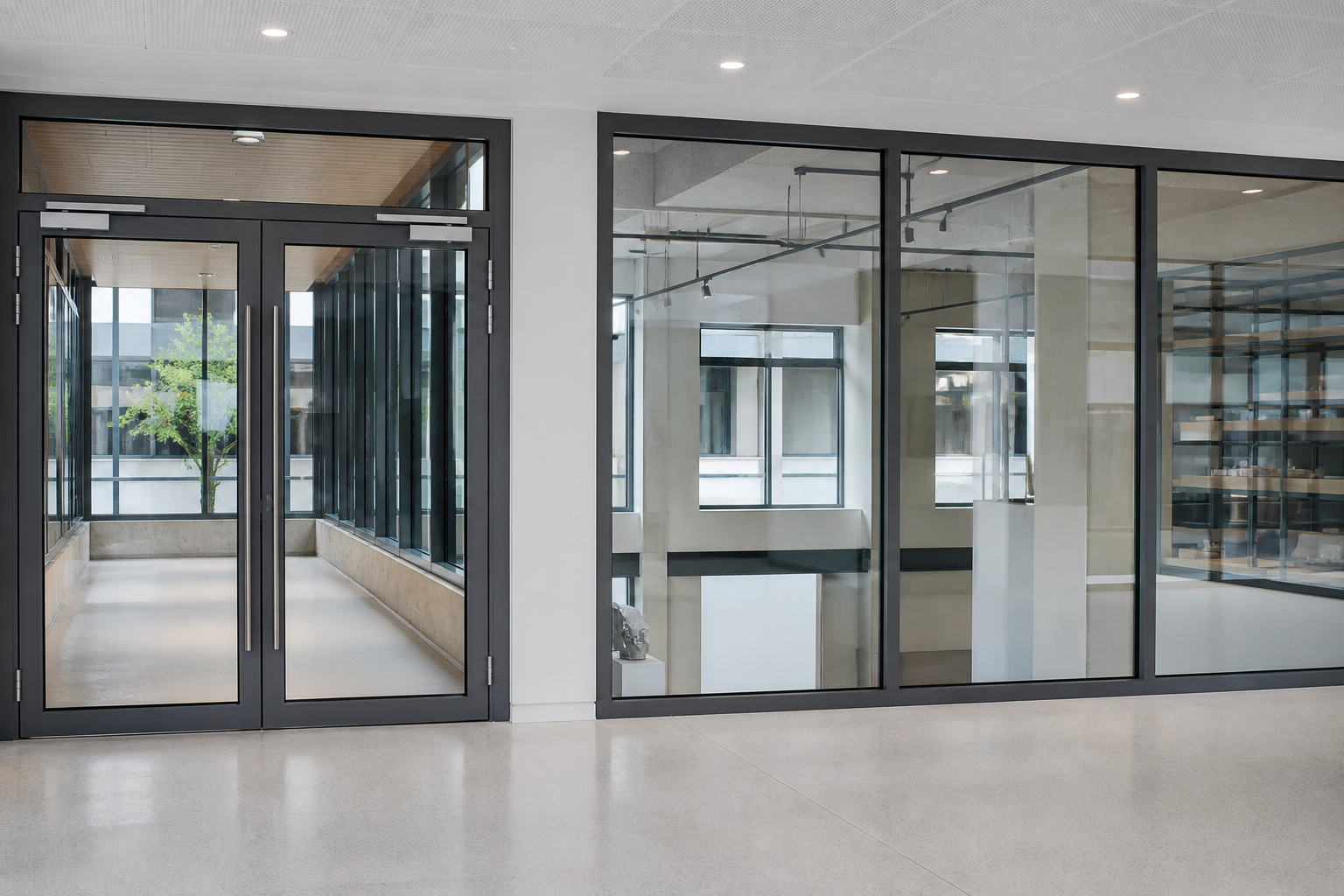
Steel screens and glazed steel doors are particularly useful when a refurbishment needs better zoning but still wants to keep light moving through the interior. For example, you may want to define meeting rooms, corridors, reception areas or circulation spaces without creating a closed-off feel.
In these cases, steel can provide structure and definition while maintaining visibility. That makes it a practical option when the brief calls for both separation and connection.
3. You need a durable solution in hard-working commercial spaces
Commercial refurbishments are rarely just about looks. Openings have to stand up to regular use and continue performing well over time. Steel is often considered where robustness and long-term reliability are important parts of the brief.
This is especially relevant for entrances, internal access points and other frequently used areas where wear and tear can quickly expose a poor specification choice.
4. Several openings need to work as one coordinated package
Refurbishment work becomes more complex when doors, screens and windows all affect one another. Sightlines need to feel consistent. Opening styles need to suit the layout. Installation has to account for the realities of the existing building.
That is why steel is often the right choice when the project benefits from a joined-up approach rather than a series of separate product decisions. If you are planning a wider package of commercial glazing solutions, it helps to assess the openings together from the start.
5. The finish matters as much as the function
Some refurbishments are driven by more than compliance or replacement need. They are intended to reposition the building, improve how it feels to occupants and visitors, or create a more premium environment. In those cases, the visual quality of the doors, screens and windows becomes a bigger part of the investment decision.
Commercial steel windows and doors are often the right choice when the client wants a strong architectural finish alongside practical performance.
What to assess before you specify steel
Start with the existing openings
In refurbishment projects, the building usually sets the first constraints. Existing structural openings, surrounding materials, access for installation and the condition of retained elements all influence what is practical.
Before deciding on any system, we recommend looking closely at the openings themselves. That helps avoid choosing a product too early and then trying to force the building to suit it.
Check the performance brief early
Steel may be the right visual and practical choice, but the specification still needs to align with how the building will be used. Questions worth asking at an early stage include:
How exposed are the external openings to weather?
What level of glazing, visibility or privacy is needed?
Will the layout require ventilation through specific openings?
Are there acoustic or security considerations to account for?
Does the project include a fire strategy that affects doors, screens or windows?
Where the refurbishment also calls for protected routes or compartmentation, a standard steel system may not be enough. In those cases we can also advise on fire rated windows, screens and doors so appearance and performance are considered together.
Think about sequencing and installation
Refurbishment sites can be less predictable than new build projects. Existing walls may be out of square, access can be tighter and other trades may be working around retained areas. That is why installation planning matters just as much as product choice.
As a business that manufactures, supplies and installs, we understand the value of resolving practical questions early. It can reduce disruption on site and make the final result more consistent.
When steel may not be the first choice
Steel is not automatically the best answer on every commercial scheme. A project led mainly by upfront cost, a design brief that points to a different visual language or an opening better suited to another system may call for a different route.
That is one reason clients come to us early. We do not only work with one product type. Alongside steel systems, we also manufacture and install a broader range of glazing products, so our advice can stay focused on suitability rather than pushing a one-size-fits-all answer.
Why work with Hadrian Window Systems Ltd?
Commercial refurbishment tends to run more smoothly when windows, screens and doors are considered together. At Hadrian Window Systems Ltd, we manufacture, supply and install steel windows and doors from Blaydon-On-Tyne, and our experience in the commercial sector spans a wide range of projects.
Established in 2003
Manufacturer, supplier and installer
Experienced in external glazing as well as internal doors and screens
Also able to advise where fire rated systems are required
FENSA Registered, ISO 9001:2015 accredited, CHAS accredited and Constructionline
That joined-up approach is valuable in refurbishment work, where existing conditions, design intent and installation practicalities all need to be balanced carefully.
Frequently asked questions
Are commercial steel windows and doors suitable for older buildings?
Often, yes. They are regularly considered where the brief calls for slim profiles, a strong architectural appearance or a finish that sits comfortably with the building’s existing character. Suitability still depends on the opening condition, performance requirements and the wider refurbishment design.
Can steel screens be used internally on commercial refurbishment projects?
Yes. Internal steel screens can help create defined areas while maintaining light and visibility. They are a strong option when you want separation between spaces without making the interior feel closed off.
Are standard steel doors the same as fire rated doors?
No. If the project requires fire resistance, the door, screen or window must be specified as a dedicated fire rated system. That decision should be made early so the refurbishment package can be coordinated properly.
Do steel windows and doors suit every commercial refurbishment?
Not always. The right answer depends on the budget, appearance, use of the space, performance needs and installation constraints. The best outcomes usually come from reviewing the whole opening package rather than choosing one material too soon.
What is the benefit of using one company to manufacture, supply and install?
It can make communication clearer and help align the design brief with installation reality. In refurbishment work, where existing conditions often shape the final detail, that joined-up process can be especially useful.
Conclusion
Commercial steel windows and doors are usually the right choice when a refurbishment needs slim sightlines, durable performance, strong visual impact and a coordinated approach across multiple openings. If you are weighing up steel windows, screens and doors for a live or planned project, speak to Hadrian Window Systems Ltd about your commercial refurbishment project. We will help you assess the brief clearly and decide whether steel is the right fit for the building and the result you want to achieve.
Comments